🏠 Our F-84F Thunderstreak
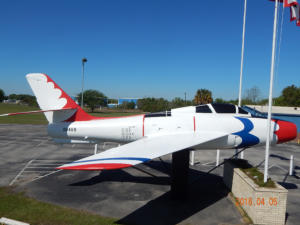
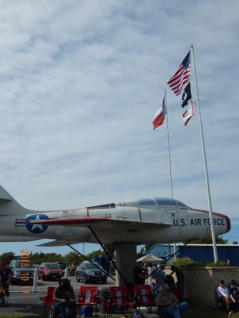
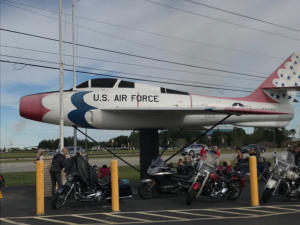
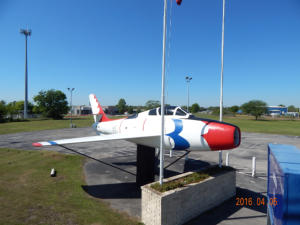
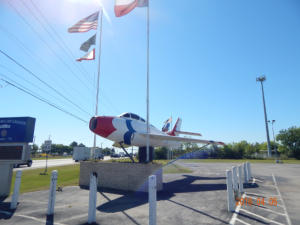
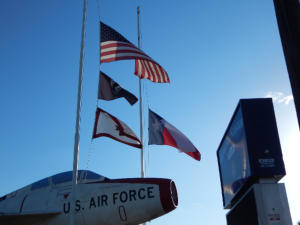
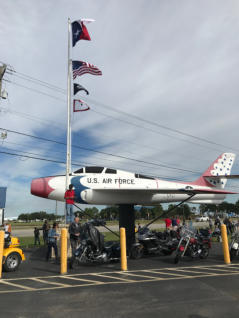
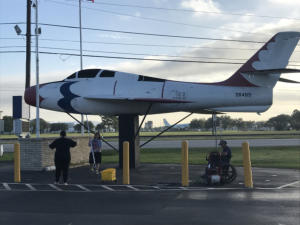
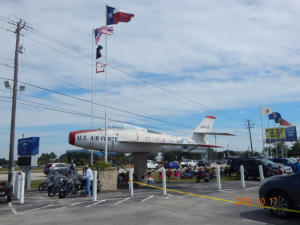
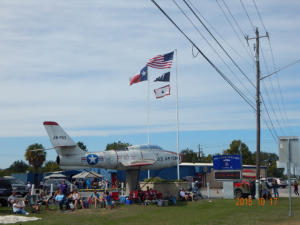
For decades, the Republic F-84F Thunderstreak stood proudly in front of American Legion Post 490 — a sentinel at the gates of Ellington Field, greeting every veteran and visitor who passed by. Painted in the iconic red, white, and blue livery of the USAF Thunderbirds aerial demonstration team, our F-84F was one of the most recognizable landmarks in South Houston.
This is the story of that aircraft — from the factory floor in Farmingdale, New York, through 17 years of active service across five Air Force wings and two Air National Guard squadrons, to its final home of honor in front of Post 490.
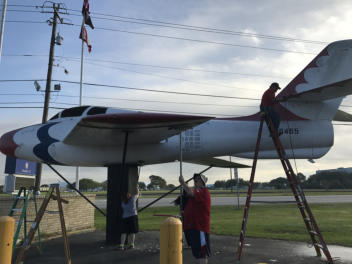
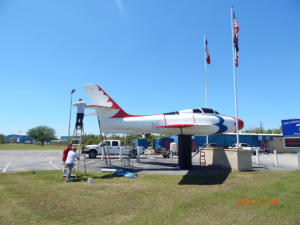
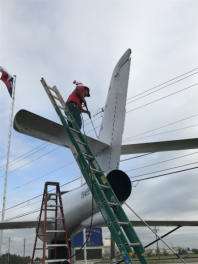
The aircraft was a gift to Post 490 through the efforts of members and community supporters, prepared for display by Post members who were themselves veterans of Ellington Field. It represented the bond between Post 490 and the military heritage of South Houston.
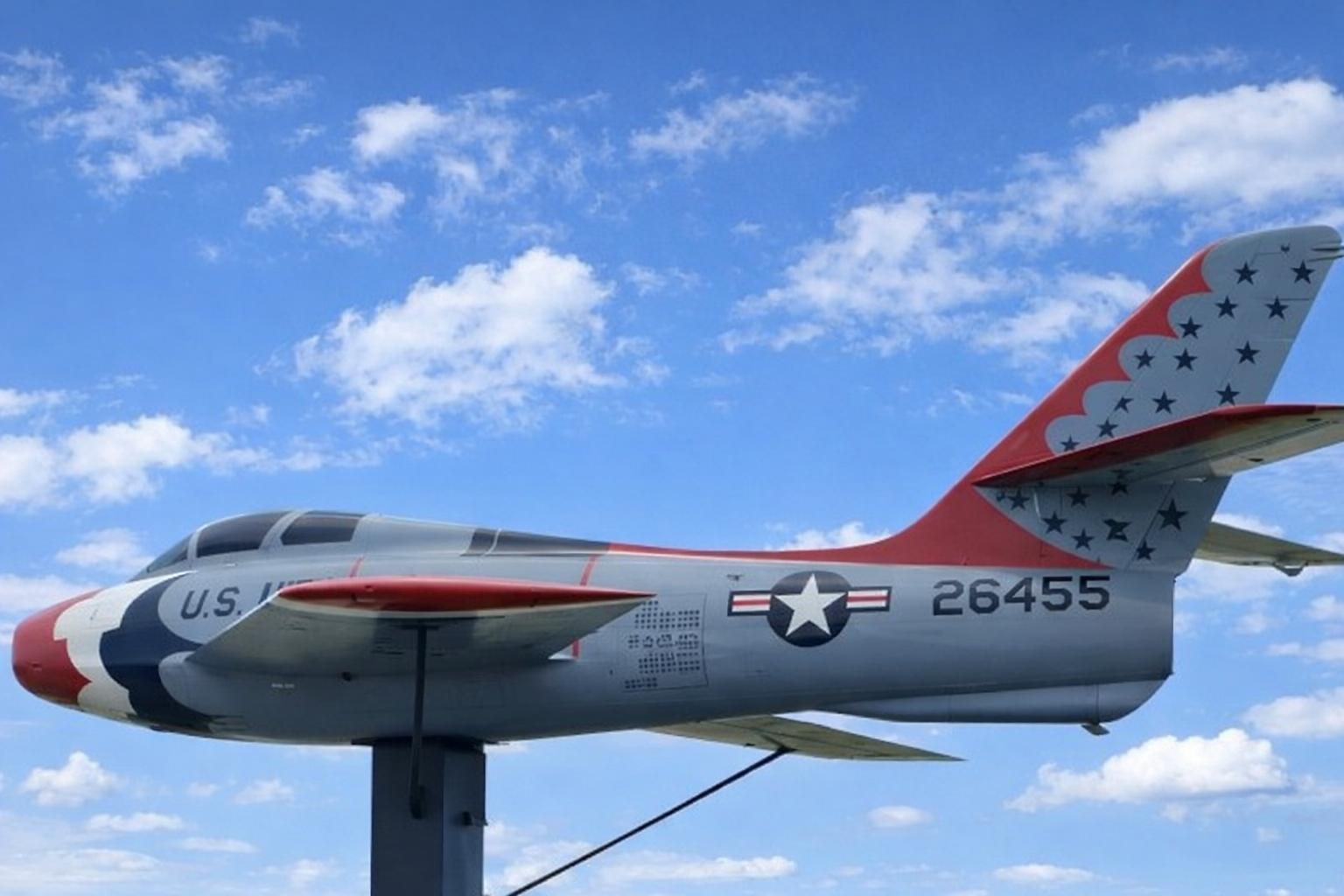
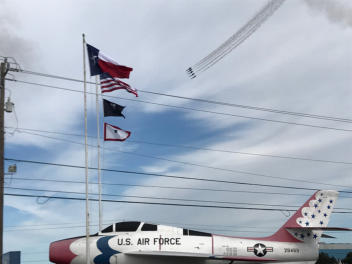
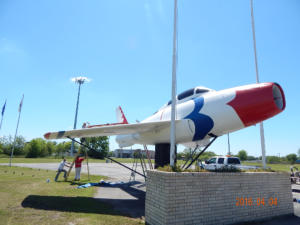
S/N 52-6455 — the Thunderbird livery gleaming under a Texas sky at Post 490
📋 Service History — S/N 52-6455
From its delivery off the Republic Aviation production line to its final transfer to museum status, Serial Number 52-6455 served across five different wings and two Air National Guard units over 17 years of continuous military service. Research contributed greatly by the hard work of Legionnaire Jerry Blaylock.
Delivered to the USAF by Republic Aviation Corporation, Farmingdale, New York. Aircraft designated F-84F-35-RE.
Assigned to the 405th Fighter-Bomber Wing (Tactical Air Command), Langley AFB, California, and RAF Burtonwood, United Kingdom.
Assigned to the 3600th Combat Crew Training Wing (Air Training Command), Luke AFB, Arizona.
Moved to Mobile Air Material Area, Alabama for maintenance and reassignment processing.
Assigned to the 113th Fighter-Interceptor Squadron (Air National Guard), Hulman Field, Indiana.
Unit redesignated as the 113th Tactical Fighter Squadron.
Unit assigned to Tactical Air Command — part of the national mobilization response to the Berlin Crisis, when F-84Fs were temporarily recalled to USAF service.
Assigned to the 122nd Tactical Fighter Wing (Tactical Air Command), Hulman Field, Indiana.
Assigned to the 12th Tactical Wing (Tactical Air Command), MacDill AFB, Florida.
Assigned to the 366th Tactical Fighter Wing (Tactical Air Command), Holloman AFB, New Mexico.
Returned to Mobile Air Material Area, Alabama.
Assigned to the 102nd Tactical Fighter Group (Air National Guard), Logan Airport, Massachusetts.
Unit moved to Otis AFB, Massachusetts (Deployed to Baer Field, Indiana).
Dropped from active inventory by transfer to museum status — and ultimately to its permanent place of honor in front of American Legion Post 490, South Houston, Texas.
⚙️ Aircraft Specifications
📦 Dimensions & Weight
| Wingspan | 33 ft. 7 in. |
| Length | 43 ft. 5 in. |
| Height | 15 ft. 0 in. |
| Max Weight | 27,000 lbs. |
| Crew | One (pilot) |
| Unit Cost | $769,000 |
| Total Built | 2,711 |
⚡ Powerplant & Performance
| Engine | Wright J65-W-3 |
| Thrust | 7,220 lbs. |
| Max Speed | 685 mph |
| Cruise Speed | 535 mph |
| Range | 1,900 miles |
| Service Ceiling | 44,450 ft. |
| Climb Rate | 8,200 ft./min. |
🏳️ Armament
| Guns | Six .50-cal. M3 machine guns |
| Rockets | 24 × five-inch HVAR rockets |
| Bombs | 6,000 lbs. external stores |
| Nuclear | Mark 7 tactical nuclear bomb capable (LABS system) |
🏆 Records & Achievements
| Speed Record | 2,445 miles in 3 hr. 44 min. (1955) |
| Distance Record | 5,118 miles London to Austin, TX (refueled) |
| NATO Deliveries | 1,301 aircraft to allied nations |
| First Flight | June 3, 1950 (prototype XF-96A) |
| Manufacturer | Republic Aviation / General Motors |
✈ About the F-84F Thunderstreak
The Republic F-84F Thunderstreak is an American swept-wing turbojet-powered fighter-bomber that played a pivotal role in the early Cold War. Though officially designated a variant of the F-84 Thunderjet, it was essentially a new aircraft — the swept wing and tail making it competitive with the F-86 Sabre.
The prototype, designated XF-96A, first flew on June 3, 1950, piloted by Otto P. Haas. Production deliveries began in 1954, primarily to Tactical Air Command units as a ground-attack fighter-bomber. Republic Aviation built 2,112 F-84Fs at Farmingdale, New York; General Motors fabricated an additional 599. Of the total production run, 1,301 were delivered to NATO air forces under the Military Assistance Program, equipping squadrons in France, Belgium, Italy, the Netherlands, West Germany, Turkey, and Greece.
The F-84F holds the distinction of being one of the first USAF jet fighters capable of delivering tactical nuclear weapons. Equipped with the Low Altitude Bombing System (LABS), it could penetrate enemy defenses at low level and high speed before pulling up sharply to loft a nuclear bomb onto the target — then use every ounce of its 685-mph top speed to escape the blast radius.
⭐ The Thunderbirds Connection
USAF Aerial Demonstration Team · 1955
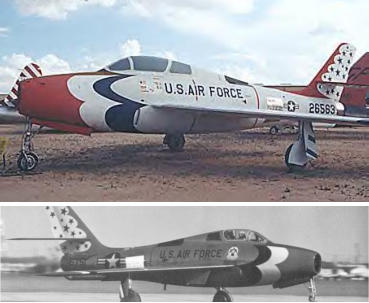
The F-84F Thunderstreak earned its most glamorous role when the U.S. Air Force Thunderbirds aerial demonstration team adopted it as their showcase aircraft in 1955. Always flying the most advanced fighters of the era, the Thunderbirds traded their F-84G Thunderjets for the swept-wing Thunderstreak.
The team performed a signature 15-minute formation aerobatics display — and as the season progressed, incorporated a solo aircraft into the show for additional crowd-thrilling maneuvers. The bold red, white, and blue Thunderbird livery that our Post 490 aircraft wears to this day is a direct tribute to this chapter of F-84F history.
After just one season with the Thunderstreak, the team transitioned to the F-100C Super Sabre in 1956 — but the F-84F's place in Thunderbirds history is permanent, and Post 490's aircraft proudly carries those colors.
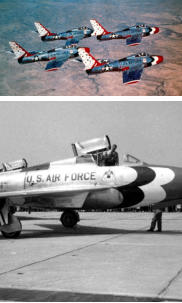
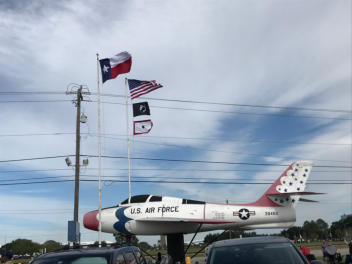
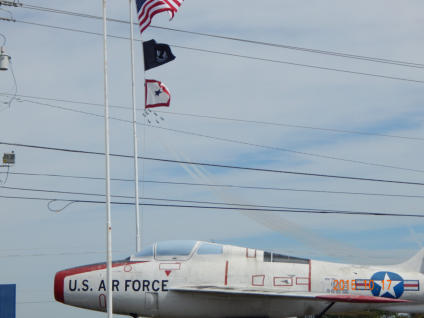
F-84F Thunderstreak in Thunderbirds formation (top) and on the flight line
👤 A First-Hand Account
The F-84 that Jerry Blaylock spoke of — number 52-6455, located at the American Legion post in front of Ellington Field — has a special meaning to me. I was stationed at Ellington when the #6455 was flown in. I was assigned the duty of getting it ready for display at the American Legion.
When it arrived, all the armament was already removed, but while searching the nose section for any foreign objects I found two live .50-caliber rounds and a number of spent cartridge hulls, and several of the clips that hold them together.
Also, when the engine was removed I retrieved the engine ID plate, and still have it in my possession to this day.
— Mike Cole, Houston, Texas · January 21, 2005
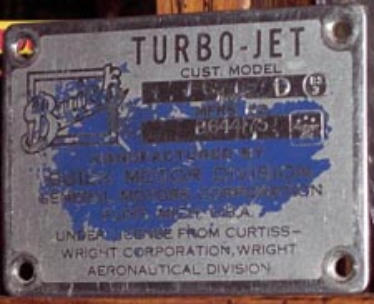
The engine manufacturer's data plate from the Wright J65 turbojet — the type of plate Mike Cole retrieved when the engine was removed for display.
Page History
Research and history of S/N 52-6455 contributed greatly by Legionnaire Jerry Blaylock. Referenced sources include the Discovery Channel — Great Planes: Republic F-84 Thunderjet (49-minute documentary).
📷 Photo Gallery
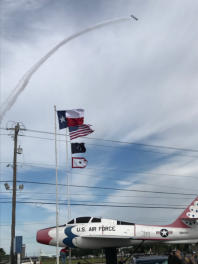
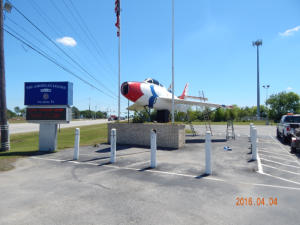
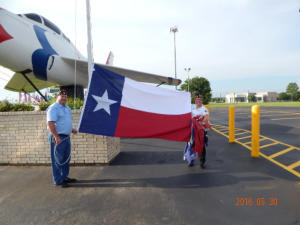
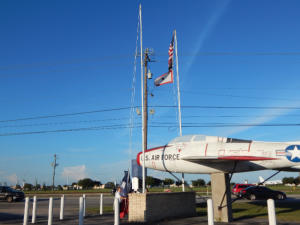
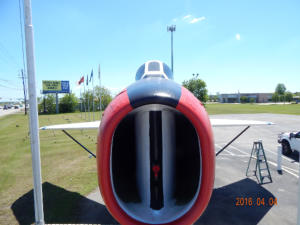
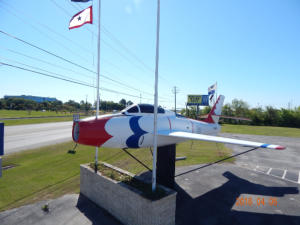
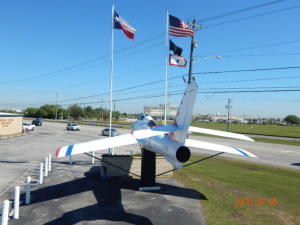
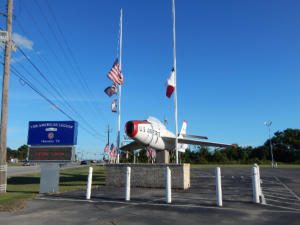
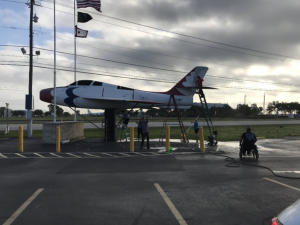
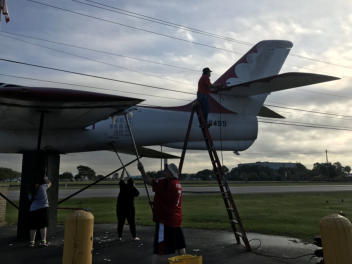
Photos of the F-84F on display at Post 490 across the years — maintenance, painting, ceremonies, and everyday life at the Post. Click any photo to enlarge.
For God and Country
The F-84F Thunderstreak stood watch over Post 490 as a symbol of the service and sacrifice of every veteran who called this Post home. Support the rebuild — so that our aircraft and our Post can serve another generation.